Guide · Outdoor & speciality
Tent, horse rug, club flag: what fits through the machine
Updated: September 2026
2 min read
Not every repair is a garment. On the table: tent panels, backpacks, horse rugs worn through at the strap, boat covers, dog harnesses and embroidered club flags. The machines sew heavy cloth and leather — the question is rarely whether we can sew it, but whether the piece fits through the machine.
- The limit is usually the size, not the material
- Zips, seams and patches make up most of the work
- A repaired seam does not make coated fabric watertight on its own
- Stables and clubs hand over whole batches by arrangement
- If in doubt send a photo — it saves the trip with a piece that will not fit
Contents
Prices and process at a glance:
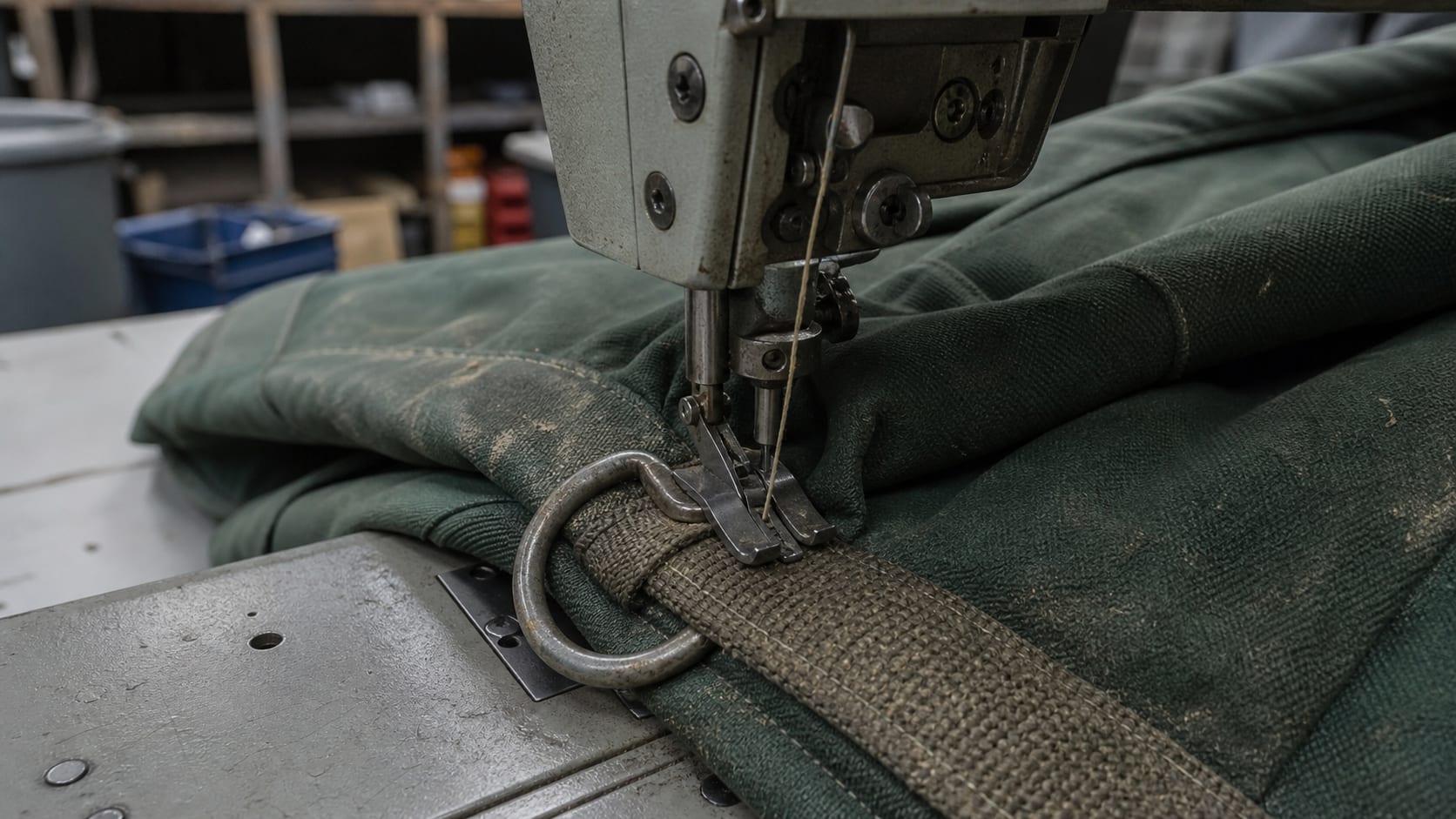
Where the damage sits matters more than the fabric
The limit is rarely the material. It is the size. An industrial machine has a fixed gap between needle and pillar, and whatever will not feed through that gap cannot be sewn. A horse rug goes through; a whole tarpaulin in one piece usually does not — though the seam that needs the work often does. So the first question is never 'which fabric?' but 'where exactly is the damage?'. A tear in the middle of a six-metre tarpaulin is a different problem from the same tear ten centimetres from the edge.
What lands on the table
Zips, seams and patches make up most of it.
- Tents and backpacks — mainly zips, split seams and patches over worn spots.
- Rain jackets — tears and seams; on coated fabric we say upfront what is worth doing.
- Horse rugs — straps, D-rings, leg cords and places worn through.
- Dog harnesses and dog coats — webbing, fastenings, seams.
- Tarpaulins, awning and boat fabrics — as far as they fit through the machine.
- Club flags — embroidered or lettered, secured seam by seam rather than patched over.
Coated and waterproof
On coated and waterproof fabrics we tell you honestly upfront what is worth doing. The reason is simple: every stitch we set is a hole. On a pair of jeans nobody minds. On a rain jacket it is precisely the property you bought the thing for. A seam can be repaired; that does not automatically make it watertight again — sealing tape or a sealant has to go on top. Sometimes a patch applied on the outside is the more durable and more honest answer than a discreet seam that lets water through on the second wet day.
Stables and clubs
In autumn especially we take whole batches from stables: straps, D-rings, tears, leg cords. That runs differently from a single repair. We arrange a batch drop-off, go through the rugs together and fix a collection day. Sorting is part of it, and it is the most important part. A rug whose fabric is giving way in several places at once will not survive the season even with new straps — we set those aside rather than charge you for a repair that opens up again in January. The same applies to clubs, by arrangement.
What to bring
Bring the piece washed, or at least shaken out — a horse rug straight from the stable is hard on the machine, and grit in the weave blunts the needle. Bring whatever belongs with it: the torn-off strap, the slider you found inside the tent, the manufacturer's spare part if you ordered one. And if you are not sure a piece is even a candidate, send a photo or bring it in. That costs nothing and saves you the trip with a tarpaulin that was never going to fit through the machine.
More guides
Invisible mending: what disappears and what doesn't
A moth hole in a cashmere jumper is smaller than a fingernail and still ruins the jumper. Invisible mending, Kunststopfen, rebuilds the weave thread by thread instead of covering it with a patch. How well it works comes down to size, weave and where the damage sits. Photo first, quote free — and you can post it to us from anywhere in Germany.
Updated: September 2026Read more
A memory bear from clothing: is one shirt enough?
Usually, yes. One shirt or blouse is enough for a bear, and whatever is left over comes back to you. We sew from clothing that carries a story: bears, cushions, small blankets, a christening gown out of a wedding dress. From €89 per bear, an introductory price. Everything else we work out unhurriedly in the workshop.
Updated: September 2026Read more
Leather jackets & trousers repaired
Zip, seam, lining or fit on leather jackets and trousers: much can be repaired and altered instead of giving up on the piece. Leather is handwork — we'll give you a price once we've seen it. In our workshops across Berlin, Brandenburg and the Altmark.
Updated: September 2026Read more
Common questions about outdoor and speciality repairs
What equipment do you repair?
Tents, backpacks, rain jackets and tarpaulins — mainly zips, seams and patches — plus horse rugs, dog harnesses and coats, and awning and boat fabrics, as long as they fit through the machine.
What decides whether you can take a piece on?
Usually the size, not the material. If it feeds through between needle and pillar, it can be sewn. If in doubt: send a photo or bring it in.
Will a repaired rain jacket still be waterproof?
Not automatically. Every stitch is a hole; watertightness needs sealing tape or a sealant on top. We tell you beforehand what makes sense in that spot.
Do you repair horse rugs in larger quantities?
Yes — in autumn especially we take whole batches from stables: straps, D-rings, tears, leg cords. We arrange a batch drop-off and a fixed collection day.
Can you repair old club flags?
Carefully, yes. Embroidered and lettered flags we secure seam by seam instead of patching over large areas. What is possible without risk, and what belongs with a restorer, we tell you once we have seen the flag.
Ready? Stop by.