Guide · Fit
What a tailor changes that brands cannot
Updated: September 2026
2 min read
Off-the-rack sizing is designed for a body that barely exists — the perfectly average one. A tailor starts from your actual measurements, and that shift changes how you carry yourself, how often you reach for a piece, and how much the clothes look like they cost.
- Altering is usually cheaper than buying new
- Even a high-street blazer from Zara or H&M looks more expensive after tailoring
- Bring shoes and layers to the appointment for an accurate fit
- Suits, coats and occasion wear benefit most
- Workshops in Berlin, Bernau, Strausberg and Tangermünde
Contents
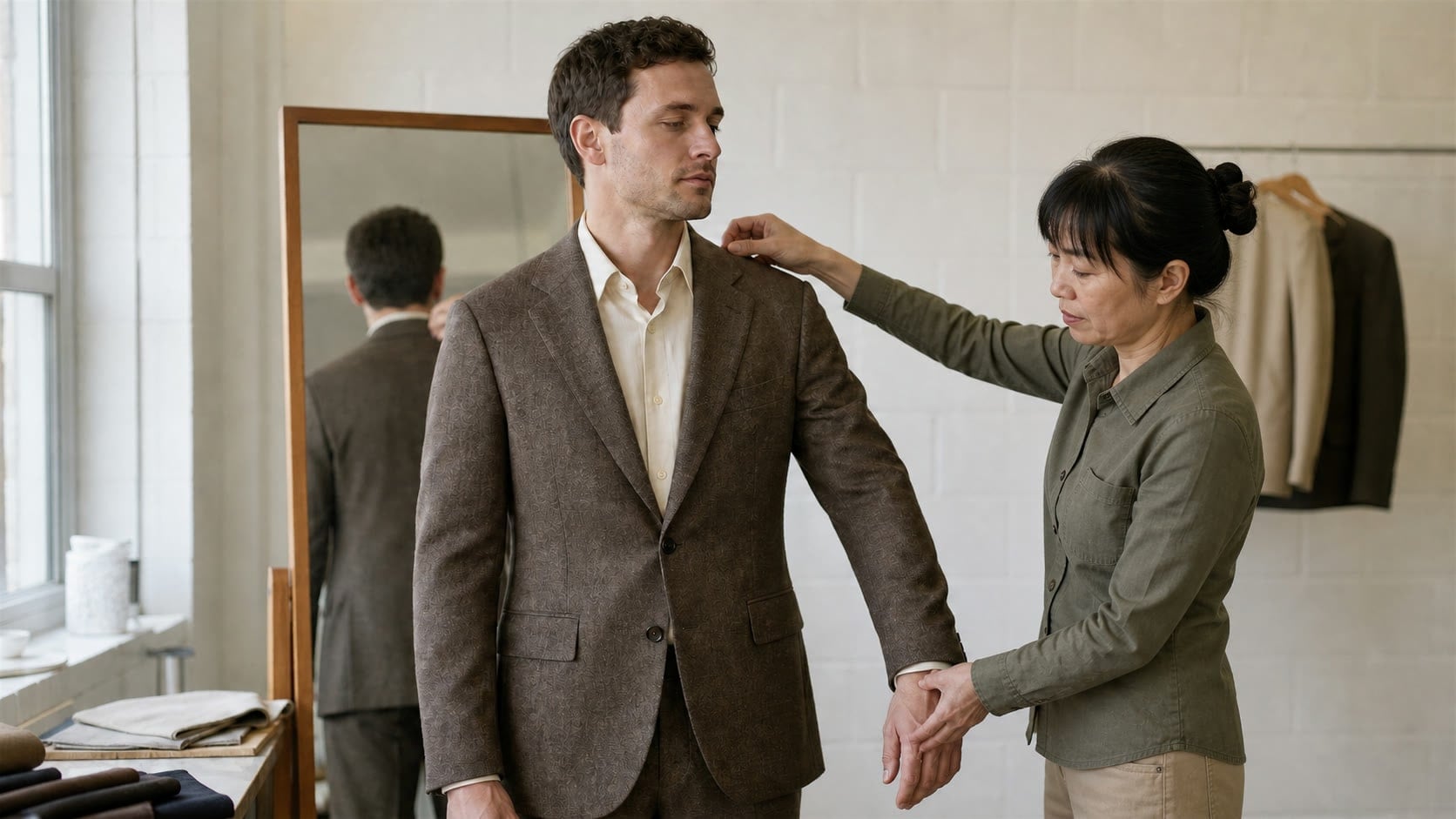
Your body is not a standard size
Every brand uses the same letters — S, M, L, XL — and fills them with completely different measurements. A medium shirt can differ by several centimetres from a medium jacket at the same retailer. A tailor works from your measurements, not a chart, and the whole fitting logic changes from there.
What tailoring changes that brands cannot
Each of these can be solved on a single piece, and none of them is something volume production is set up to do.
- 01
Your body is not a standard size
Mass-market size labels are unregulated; the same M varies by centimetres between brands and even between one collection and the next.
- 02
A tailor fits the garment to you
We measure shoulders, waist, sleeve length and posture, then adjust seams, hems and waistbands so the piece follows your shape instead of fighting it.
- 03
Comfort you don't get off the rack
Ready-to-wear is cut to work "okay" on many bodies; altered to your measurements, a garment stops pulling at the shoulders, gaping at the waist and twisting at the seams.
- 04
Clothes instantly look more expensive
When the shoulders sit right and the sleeves end at the wrist bone, even a high-street blazer from Zara & Co. looks intentional rather than boxy.
- 05
You save by altering what you own
Altering favourite pieces is usually far cheaper than replacing a whole outfit, and it extends their life by years.
- 06
Personal style, not copy-paste
Fast fashion repeats the same cuts for millions of pieces; with alterations you choose length, taper, neckline and width so each piece supports your style.
- 07
A truly fitted look mass brands can't deliver
Volume production needs generous size tolerances; only one-to-one work with your measurements removes those compromises and gives a second-skin silhouette.
How to start
Bring in one piece you like but never wear — the jacket that fits the shoulders but pulls at the chest, the trousers that sit right at the waist but bunch at the seat. One visit usually resolves it.
More guides
Taking clothes in to fit
Shirt, dress, trousers or jacket too wide? We take it in at the side seams, waist and sleeves so it fits instead of hanging loose. Waistband from €20, larger adjustments on request. Usually one to three working days.
Updated: September 2026Read more
How to read a suit fitting — top to bottom
A suit that fits is almost invisible — you stop thinking about it, which is the point. Before you take one to a tailor, it helps to know which areas to focus on first and which fixes are straightforward versus genuinely difficult.
Updated: September 2026Read more
Finding a tailor in Berlin, Brandenburg and the Altmark
You can tell a good alterations workshop by a few clear signs: its own premises, transparent prices, honest timings. wiederjut has been working since 2003 out of our workshops in Berlin (Treptow), Brandenburg (Bernau, Strausberg) and the Altmark (Tangermünde).
Last reviewed: September 2026Read more
Common questions about fit and alterations
Is altering cheaper than buying new?
For most suits, coats and occasion wear, yes — a few targeted alterations cost far less than replacing the outfit, and you keep a piece you already like. For orientation: trouser hemming from €12, waistband from €20, dress hem from €18.
Can you make fast-fashion pieces fit better?
Often, yes. Taking in a waist, tapering legs or shortening sleeves can make a high-street piece look noticeably more tailored.
What should I bring to the first visit?
Wear or bring the shoes and the layers you'll usually pair with the piece, so we can judge length and fit against how you'll actually wear it.
Which garments benefit most from alterations?
Suits, coats and occasion wear show the biggest difference, but even a simple shirt or jeans look noticeably better with the right fit.
Does altered clothing really look more expensive?
Yes — when the shoulders sit right and the sleeves end at the wrist, even a high-street blazer from Zara or H&M looks considerably more expensive.
How do I get started?
Bring in a piece you like but never wear — one visit is usually enough to fix the fit.
Ready? Stop by.