Guide · Care
Caring for wool, suits & leather
Updated: September 2026
2 min read
How to keep wool, suits and leather looking good for years: air rather than wash, store properly, keep moths out. And how to tell when care is no longer enough and a repair saves the piece.
- Airing instead of washing makes clothes last longer
- Proper storage protects against moths and loss of shape
- Wool, suits and leather each need different care
- Cedar and lavender against moths
- When care is no longer enough and a repair saves the piece
Contents
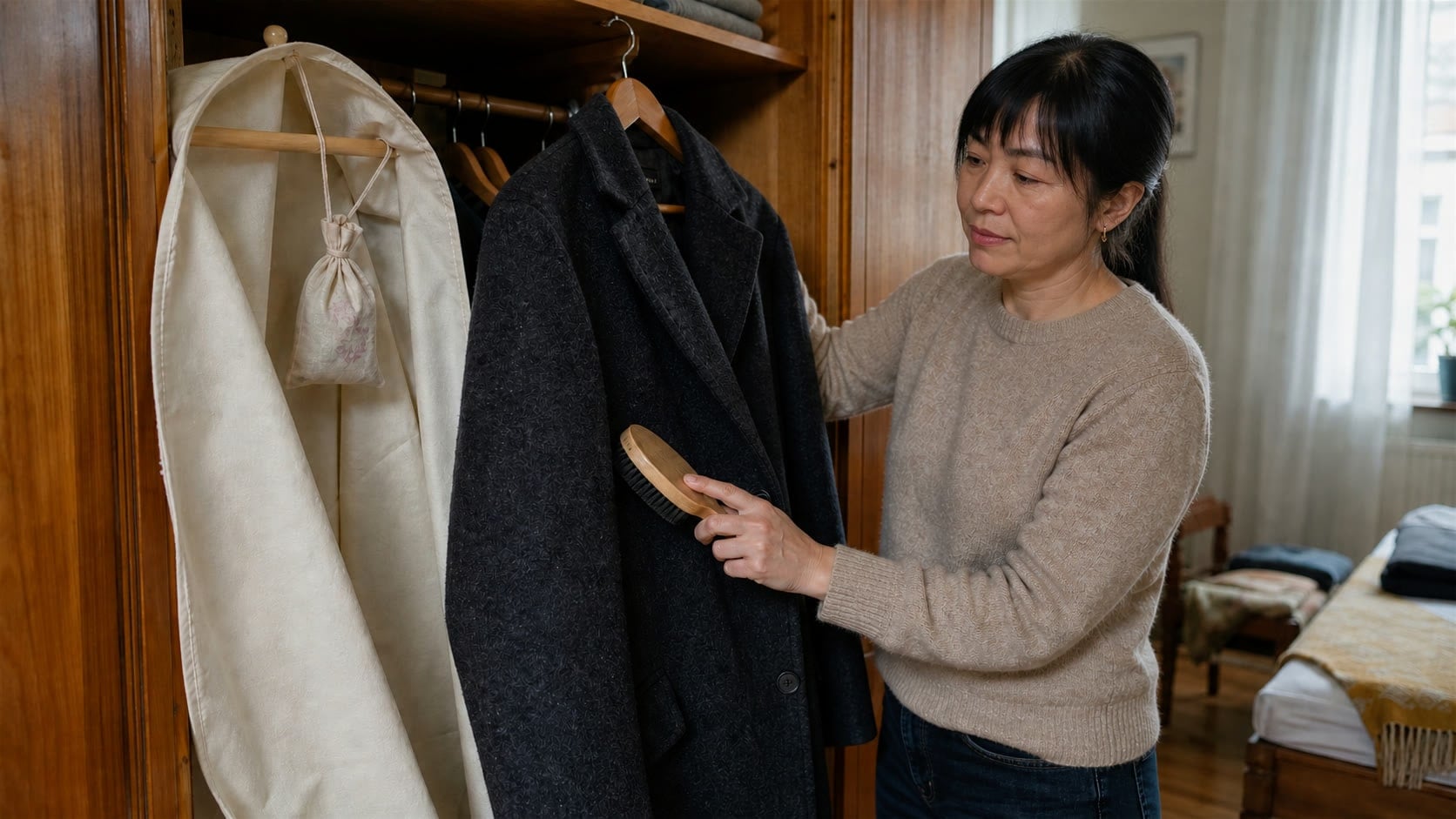
Protect wool and suits from moths
Five steps to stop moth holes from forming in the first place.
- 01
Store clean
Moths love sweat and stains. Put wool and suits away clean or aired, never straight after wearing.
- 02
Add protection
Cedar wood, lavender or an airtight garment bag will keep moths away — mothballs aren't needed.
- 03
Air and brush regularly
Hang wool out in fresh air now and then and brush it down. Moths avoid clothing that's moved.
- 04
Store dark and dry
A dry, dark wardrobe is ideal. Damp and darkness over months attract moths.
- 05
Act on an infestation
If moths strike, wash the piece or freeze it for a few days, clean out the wardrobe — and have the holes repaired.
Caring for wool and suits
Wool rarely needs washing — airing is usually enough. Hang a suit or coat out after wearing, brush it with a clothes brush, and let small creases drop out with steam instead of pressing directly with an iron. The less often you dry-clean wool, the longer it stays looking good — cleaning it too often stresses the fibres.
Moth protection that actually works
The most effective measures against moth holes.
- Only put clothes away clean — sweat and food traces attract moths.
- Place cedar wood or lavender in the wardrobe and refresh it yearly.
- Keep delicate wool pieces in an airtight garment bag.
- Air, brush and move wool regularly.
- Wipe out the wardrobe occasionally and check for webbing.
- If moths get in: wash or freeze, then clean the wardrobe thoroughly.
Caring for leather
Leather likes neither radiator heat nor direct sun. Wipe it with a slightly damp cloth, let wet leather dry slowly in the air (never on the radiator), and treat it once or twice a year with a suitable leather grease or conditioner. Waterproofing keeps the damp out. That keeps leather supple so it doesn't crack.
When care is no longer enough
Some things no amount of care will fix: a moth hole in a coat, a seam that's come open, a worn-through collar, a stuck zip. Small holes and damage can often be repaired or closed invisibly — ask us what's possible for your piece. A timely repair stops small damage from becoming a write-off.
Repair is worth it
A good wool coat or leather jacket lasts decades with proper care. Closing a seam, renewing a lining or replacing a zip costs a fraction of a new piece — and it's also the most sustainable thing you can do for your wardrobe. We'll tell you honestly what's worth doing and what isn't.
More guides
Invisible mending: what disappears and what doesn't
A moth hole in a cashmere jumper is smaller than a fingernail and still ruins the jumper. Invisible mending, Kunststopfen, rebuilds the weave thread by thread instead of covering it with a patch. How well it works comes down to size, weave and where the damage sits. Photo first, quote free — and you can post it to us from anywhere in Germany.
Updated: September 2026Read more
Leather jackets & trousers repaired
Zip, seam, lining or fit on leather jackets and trousers: much can be repaired and altered instead of giving up on the piece. Leather is handwork — we'll give you a price once we've seen it. In our workshops across Berlin, Brandenburg and the Altmark.
Updated: September 2026Read more
Getting shoes repaired — costs & tips
Resoling, heels, seams or a stuck boot zip: much can be repaired instead of throwing the shoes out. We offer shoe repair at our Strausberg location — the price depends on the material and the damage, and usually runs into double figures.
Updated: September 2026Read more
Frequently asked questions about care and moth protection
How do I protect wool from moths?
Put it away clean, add cedar wood or lavender, air and brush it regularly, and keep it dark and dry. Mothballs aren't needed.
How often should I have a suit cleaned?
As rarely as possible. Airing and brushing are usually enough. Dry-cleaning it too often stresses the wool fibres.
Can moth holes be repaired?
Small holes can often be repaired or closed invisibly. Bring the piece in — we'll tell you what's possible for your fabric.
How do I care for a leather jacket?
Wipe with a damp cloth, dry slowly in the air (never on the radiator), and condition once or twice a year. Waterproofing keeps the damp out.
Is a repair worth it instead of buying new?
With good pieces almost always — a repair costs a fraction of a new item and is more sustainable. We'll say honestly when the work is worth it. A seam repair is from €15; sewing on a button is from €5.
Do you also dry-clean?
No. We alter and repair clothing. Dry cleaning is a job for a dry cleaner — we help if an alteration or repair is still needed afterwards.
Ready? Stop by.